Administrative overhead often hides between systems
Small-business administration is not always a clearly defined job. It appears in the gaps: copying an enquiry into a spreadsheet, chasing an approval, renaming an attachment, updating a diary and then entering the same information again for invoicing. Cloud tools can reduce this work because several people can access current information and routine hand-offs can be connected. The benefit does not come from putting every process online. It comes from identifying repetitive administration that exists only because information is difficult to share, ownership is unclear or one system cannot pass a useful fact to the next.
Shared records reduce the cost of asking where something is
Cloud document storage, CRM and project tools give teams a common place to find current information. This can remove a surprising amount of checking and forwarding. The important step is deciding which system owns each record. Customer relationship details should not drift independently across several contact lists, and a final document should not compete with multiple copies in personal folders. Establish simple saving and naming practices alongside the technology. Shared access reduces administration only when employees trust the shared record enough to stop maintaining private duplicates.
Online forms can remove avoidable rekeying
Information collected by phone or unstructured email often has to be interpreted and typed into another system. A well-designed online form can capture routine details in a structured way and route them into the relevant workflow. Keep forms proportionate: asking customers for every possible field simply moves administrative burden outside the business and can make completion harder. Collect what is needed for the next decision, validate important inputs and provide a human route for unusual cases. The aim is cleaner intake, not forcing every customer situation into a rigid questionnaire.
Workflow automation is strongest at predictable hand-offs
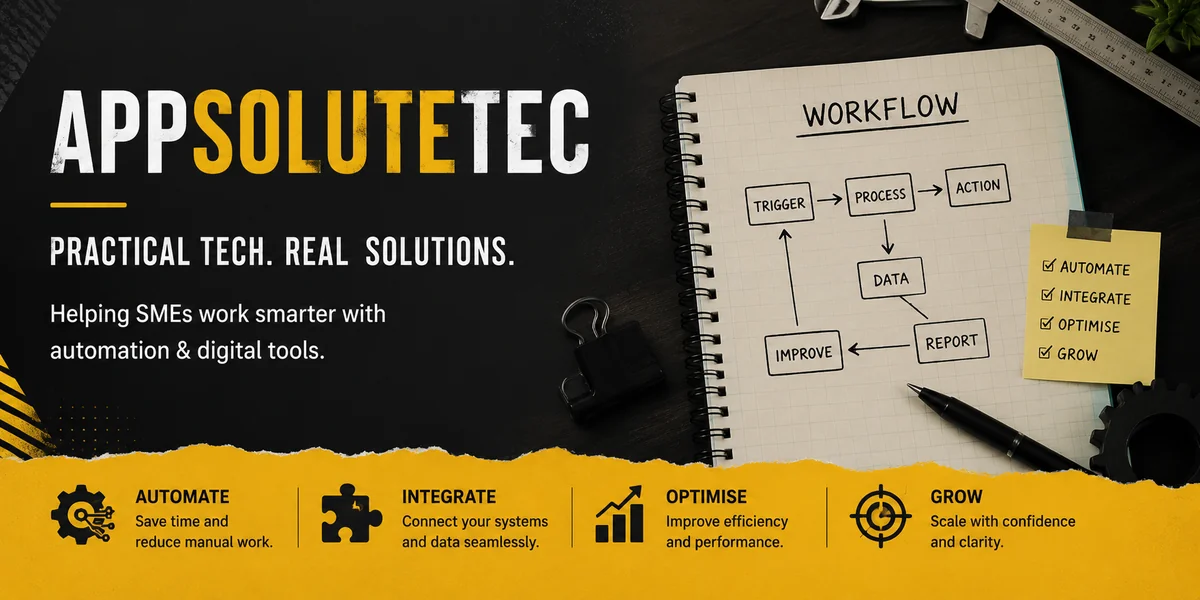
Cloud platforms can create tasks, send notifications or update statuses when defined events occur. Use this where the outcome is stable, such as assigning a standard internal checklist after a confirmed booking. Avoid automating judgement-heavy decisions simply to remove clicks. A good candidate is a repetitive hand-off that staff currently perform in the same way and can describe clearly. Start with a small number of rules and monitor exceptions. Automation that nobody owns eventually becomes invisible infrastructure, and outdated rules can create more correction work than they save.
Scheduling tools reduce diary negotiation
Appointment-based businesses often spend time exchanging messages to find a suitable slot. Cloud scheduling can expose controlled availability and let customers choose from options the business is genuinely able to deliver. The system should account for working hours, service duration and any preparation or travel that affects capacity. Changes and cancellations need a clear route as well. When scheduling connects appropriately with the wider customer or service record, staff can spend less time coordinating calendars while retaining enough control to manage exceptions.
Connected finance processes can shorten routine administration
Quotes, approved work, invoices and payments often contain the same core information. Re-entering it at every stage creates effort and opportunities for error. Cloud accounting and operational tools can reduce duplication when they pass agreed information cleanly. Define what triggers the next financial step and who remains responsible for checking it. Automation should not remove necessary commercial or accounting judgement. Reconciliation, corrections and unusual transactions should remain understandable to the people who manage the books, with professional advice sought where appropriate.
Self-service can help when the source information is dependable
Customer portals, knowledge bases and automated status updates can reduce routine requests for information that the business already holds. They work only when the underlying records are current and the customer can understand what is being shown. A self-service route that displays stale information generates additional enquiries rather than fewer. Begin with common, low-risk questions and establish ownership for the source content. Keep an obvious route to a person where the customer's circumstances do not fit the standard answer.
Measure admin removed, not software added
When evaluating cloud tools, follow a real process and count the manual hand-offs, duplicate entries and searches that disappear. Also include the new administration created by user management, configuration and subscription oversight. A useful tool should leave the process simpler overall. Review the stack periodically and remove applications whose purpose has been absorbed elsewhere. Cloud software can reduce admin overhead for a small business when it creates shared records and dependable hand-offs. Buying more subscriptions is not the objective; giving people fewer unnecessary steps between customer need and completed work is.